Processing a Refusal to Fill
If a pharmacist in their professional judgement deems that a prescription should not be filled, they can discontinue the prescription on the EHR Profile and indicate that the prescription was refused with a Clinical Service (CS) code. This advises other healthcare professionals that a pharmacy decided not to complete the dispense.
Refusal to Fill special service fees will now be paid offline/monthly. PharmaCare will always pay the maximum amount, regardless of the dispensing fee. To receive payment for a Refusal to Fill, the process outlined below should be followed.
In British Columbia, a Refusal to Fill can only be transmitted after a prescription is created on the EHR (i.e., has a Rx ID). If the prescription does not exist on the EHR, the prescription must be placed on Hold first.
To indicate a Refusal to Fill for a prescription.
-
If the prescription does not exist on the EHR, enter it in Propel Rx and then place it on Hold and complete its Workflow.
-
From the Patient Profile, deselect the Active checkbox for the prescription. The Inactivate Rx window opens.
If the prescription exists on the EHR, you can do one of the following:
-
Download the Prescription and place it on Hold before discontinuing it. This keeps a record of the prescription locally and is the recommended approach.
-
Update its status and indicate the Refusal to Fill from the Rx Authorizations Profile.
-
-
Select the Discontinue option.
-
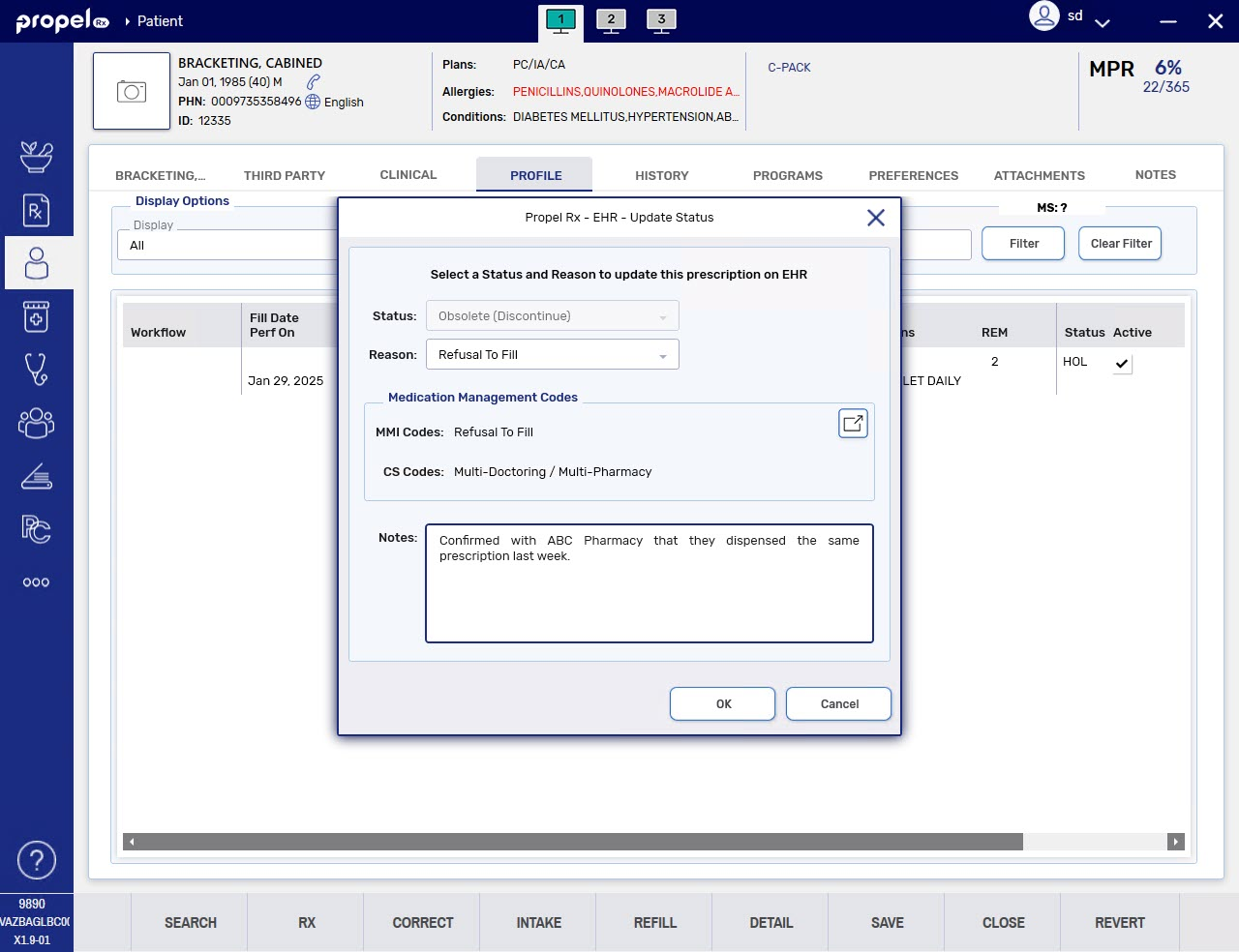
Select OK. The EHR - Update Status window opens.
-
From the Reason dropdown, select Refusal to Fill.
-
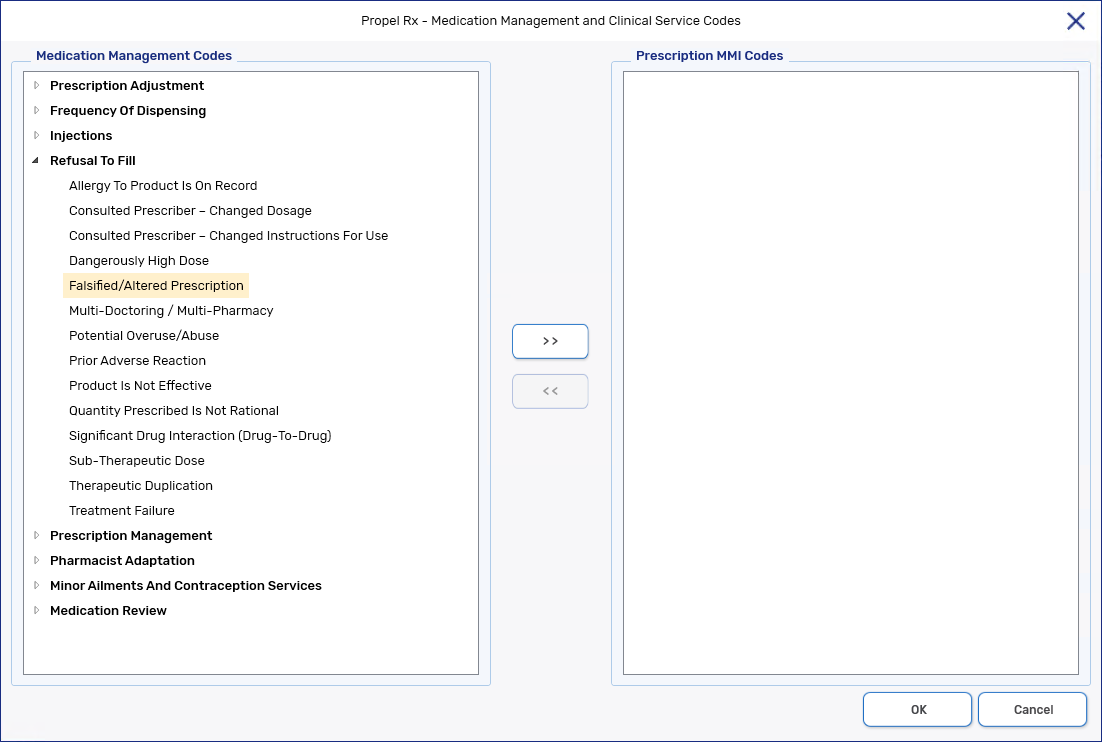
In the Medication Management Codes section, select the expander button
 to open the Medication Management and Clinical Service Codes window.
 -
Select the Refusal to Fill dropdown and select the appropriate code that corresponds to your rationale for refusing to fill the prescription.
-
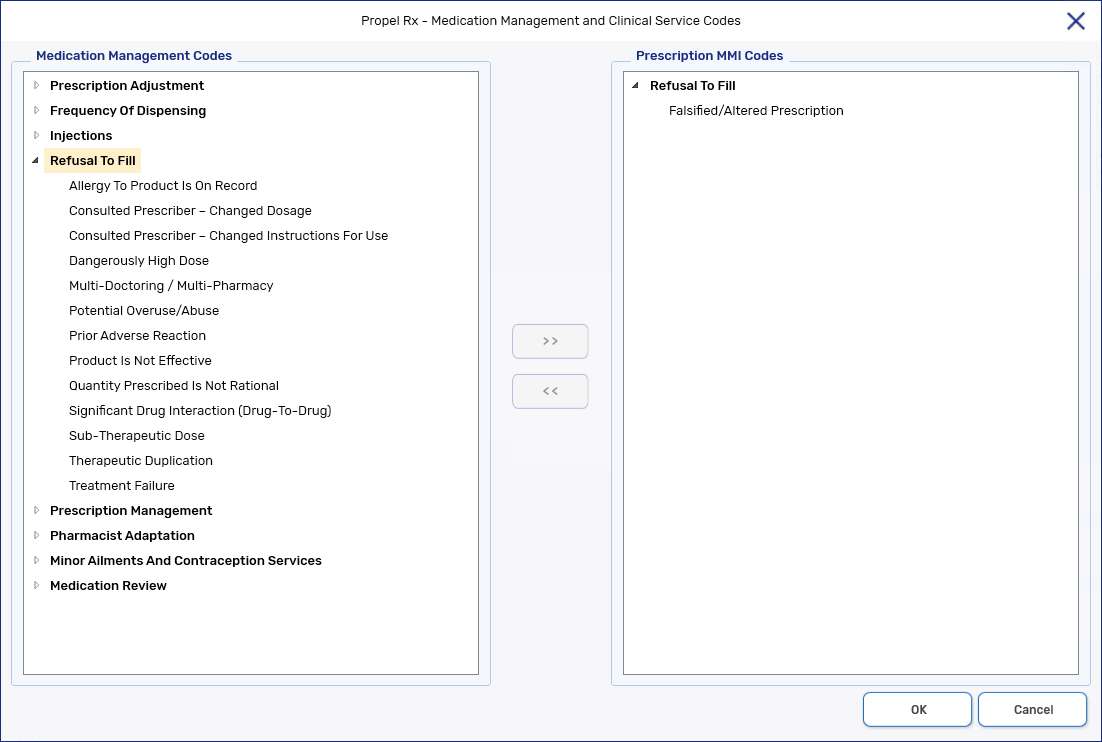
Select the right arrow button (>>).
-
Repeat steps 7 - 8 if you want to transmit additional codes.
-
Select OK.
-
Enter any optional notes. These notes remain local only as a prescription note. They cannot be referenced from the EHR Profile.
-
Select OK.
-
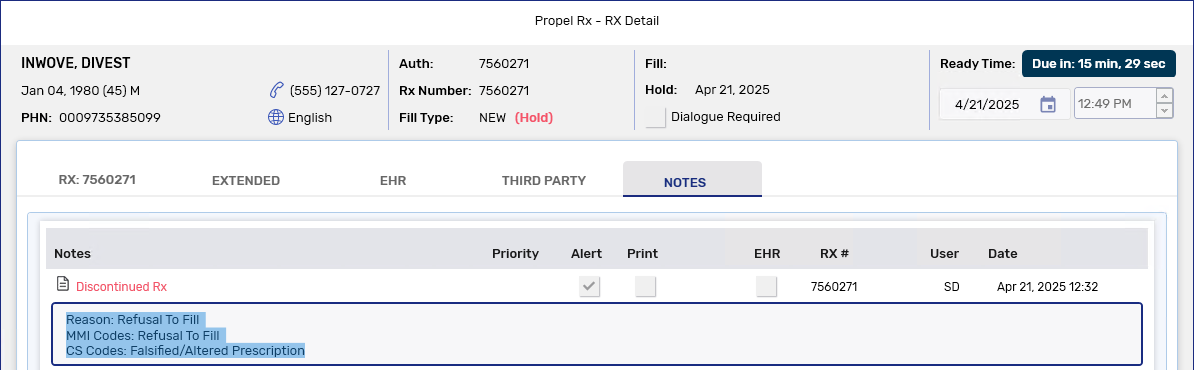
The prescription is discontinued locally, and a prescription note will be added indicating the reason, MMI and CS codes, and any notes entered.
-
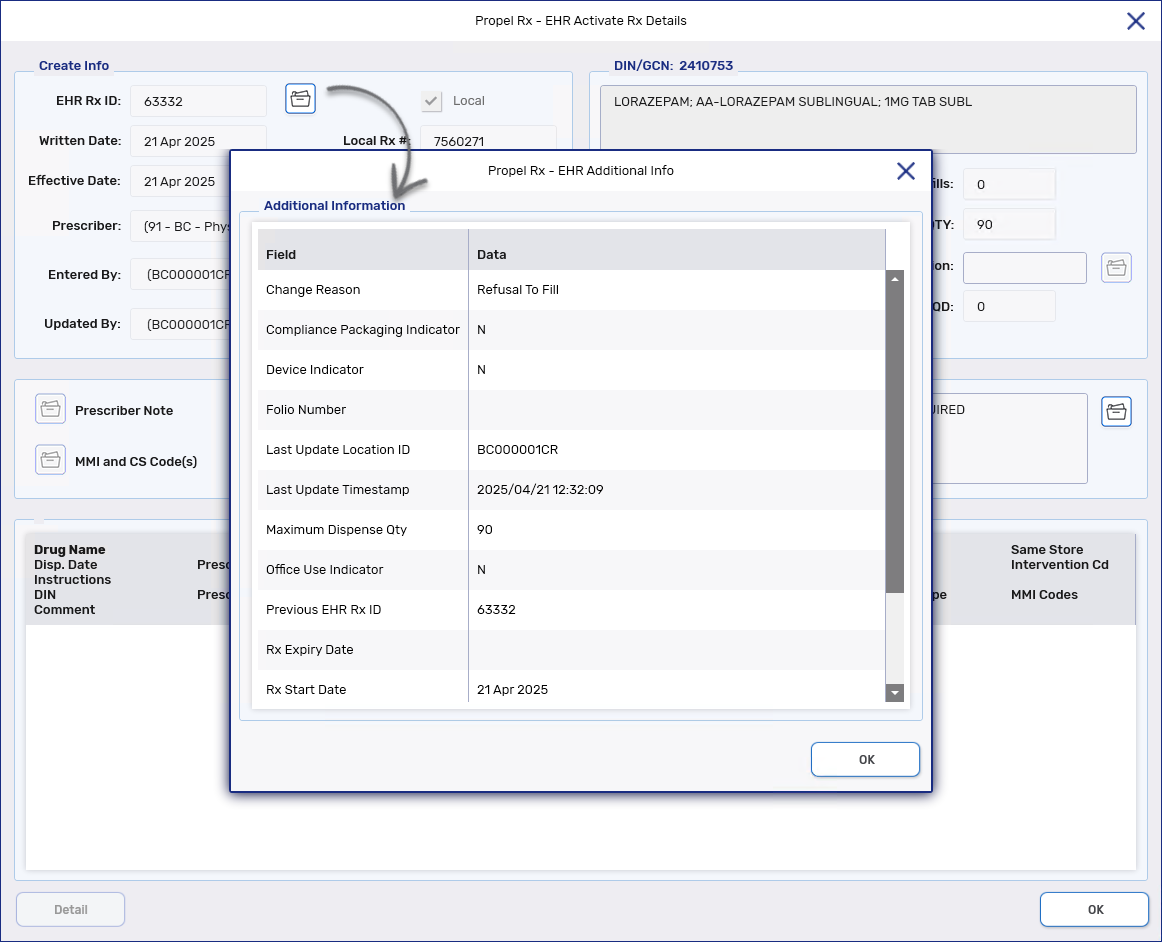
On the Rx Authorizations Profile, the prescription will appear with an Obsolete status. In the Detailed Prescription view, the EHR Additional Info window will indicate the prescription was changed due to a Refusal to Fill.
-
Based on professional judgement, a pharmacist may choose to not fill a prescription for a patient. Information is sent to the EHR, so other health professionals can see the medication has been Refused, by who, and which pharmacy. Once a Refusal to Fill is submitted to the patient's EHR, it cannot be undone. Another transaction would need to be submitted to reactivate the prescription.
To process a Refusal to Fill:
-
Process the prescription until it reaches Rx Detail. The prescription may be one of the following:
-
New - Propel Rx will generate a Create message that will obtain an EHR Rx ID, which will be needed to record the Refusal to Fill.
-
refill from a Hold - an EHR Rx ID will already be assigned to the Hold prescription.
-
refill - the prescription may be previously filled with additional refills remaining.
-
-
In Rx Detail, select the EHR tab.
-
Select the Refusal to Fill checkbox.
-
From the Reason dropdown, select a reason.

-
Select Fill to submit the Refusal to Fill to the EHR. If any Detected Issues are returned after transmitting to the EHR, action may be required. Follow the instructions presented on screen.
The status of the prescription displays as Refusal on the patient's Profile and Audit History. However, the Active checkbox remains flagged.
You can refill a Refusal to Fill prescription.
